
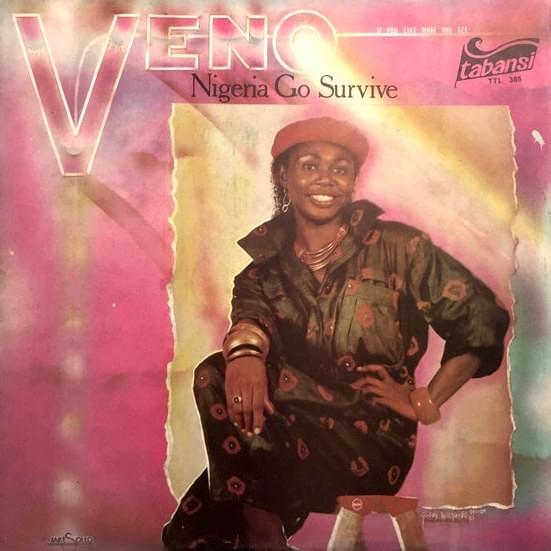
Historical Context: A Song Born in Tough Times
In the mid-1980s, as Nigeria grappled with severe economic hardship, structural adjustment programmes and a significant wave of emigration, a song emerged that spoke directly to the nation’s collective endurance. That song was “Nigeria Go Survive” by Veno Marioghae-Mbanefo.
The track gained massive popularity in 1984 during one of the country’s most difficult periods and received its full album release under Tabansi Records in 1985. It featured an upbeat electro-boogie groove paired with lyrics that addressed national challenges head-on, offering a message of defiant hope: Nigeria would survive no matter the circumstances.
The Birth of the Song and Artist Background
Veno Marioghae-Mbanefo was born on January 3, 1962, in Isoko, Delta State. While an undergraduate studying English Literature at the University of Jos, she began developing the song. She sang for Professor Samuel Otitigbe, who contributed an original version, before partnering with the late producer Jake Sollo (nephew of Chinua Achebe) and Abubakar Koke.
She was officially signed to LookHear Records (Jake Sollo’s label), with Tabansi Records serving as the marketer. Veno maintained production control and ownership of the work — a detail that later proved central to her copyright protection. Her debut project included Isoko-language tracks such as “Iwa Ti Yo.”
In 1989, she released the follow-up album “Survivor“, which featured songs like “Si Obo N’Ome,” “Iye,” “Me Rou No,” and the politically charged “Soweto’s Face” — a track that reflected her engagement with the anti-Apartheid struggle.
Cultural Resonance: Becoming an Unofficial Anthem
The song’s connection to the socio-political climate was particularly strong. It coincided with widespread frustration over unemployment and emigration (“Japa”), including a National Orientation Agency television advertisement featuring the late Nollywood actor Enebeli Elebuwa as the character “Andrew,” who expressed despair over basic amenities and contemplated leaving the country.
Veno’s lyrics directly engaged with this popular campaign — urging “Andrew, no check out o” — creating powerful cultural resonance that helped turn the song into an unofficial anthem of resilience during a very difficult era.
Reflections from the Artist
Veno has described the song’s longevity as bittersweet. While she appreciates that the track still lives on, she wishes Nigerians no longer had need for its message, likening the nation to a child whose growth remains stunted. Despite opportunities to leave (including her husband’s British right of abode), she chose to stay, citing her strong Christian convictions and belief that Nigeria will eventually stand on its own feet. She has referred to her generation — those now in their 50s — as the “Forgotten Generation,” feeling bypassed by both the older generation still in power and the younger one now rising. She prefers to describe herself as a “song activist” rather than an entertainer and continues to write for television drama series while performing gospel music.
She has also recorded a remake of “Nigeria Go Survive” featuring a young male rapper, as part of her effort to bridge generational gaps with contemporary sounds.
Recent Legal Development: The 2026 Court Ruling
On January 26, 2026, the Federal High Court in Lagos, presided over by Justice Ibrahim Ahmad Kala, ruled in Veno Marioghae-Mbanefo’s favour in her copyright infringement suit against Airtel Nigeria. The court awarded her ₦210 million (₦200 million in general damages and ₦10 million as costs) for the unauthorised use of the song in advertising, promotional and telemarketing activities related to Airtel’s sponsorship of “The Voice Nigeria.” The judgment also included a perpetual injunction restraining Airtel from further use of the work or any substantial part of it without authorisation. The ruling has been viewed as a notable development for the protection of older artists’ rights.
Legacy and Current Life
Now 64 years old and a grandmother, Veno Marioghae-Mbanefo has largely stepped back from the mainstream music scene following marriage and family life. Her journey reflects the multifaceted paths many pioneering Nigerian musicians took — from performer to writer, editor, spoken-word artist, teacher and scriptwriter. “Nigeria Go Survive” endures not because of elaborate production or fleeting trends, but because its core message of perseverance remains relevant across changing times. In an industry and a nation that continue to evolve, Veno Marioghae-Mbanefo’s contribution stands as a reminder of music’s ability to articulate shared hope and resilience when circumstances test a people’s resolve. It is a classic that deserves ongoing recognition as part of Nigeria’s rich musical heritage.
Citations & Reference links
Discogs: Veno Marioghae – Survivor – Vinyl (LP, Album, 1989)
Discover more from Nigerian Sounds
Subscribe to get the latest posts sent to your email.