
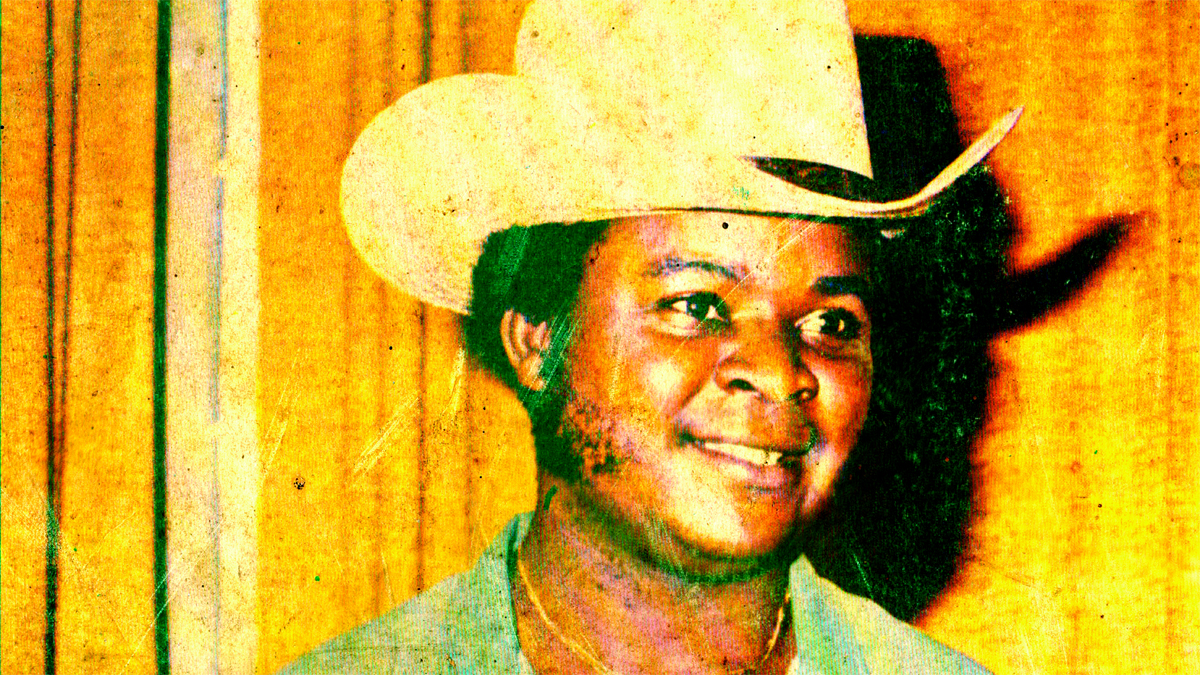
While the rest of Nigeria was moving to the brassy, organic swing of Afrobeat and Juju, William Onyeabor was tucked away in an Enugu studio experimenting with imported synthesizers. He wasn’t the most famous musician in the country—that title belonged to Fela Kuti—but Onyeabor was doing something no one else was: building a one-man electronic world. Using gear like the Moog, he created a sound that was less about the big band and more about the machine. This wasn’t some dusty relic of the past; it was a high-speed collision where traditional highlife rhythms met the jagged edge of electronic music. Between 1977 and 1985, Onyeabor dropped eight self-produced albums and then effectively vanished, leaving behind a sonic blueprint that felt decades ahead of its time.
The Wilfilms Empire
Born in Enugu in 1946, Onyeabor was a DIY machine who bypassed the major label system entirely. He built Wilfilms Limited—a private industrial empire that included his own recording studio and a sophisticated vinyl pressing plant. A dedicated gearhead, he imported the latest Roland and Moog synthesizers directly to southeastern Nigeria, meticulously layering Igbo rhythms with futuristic electronics. The most enigmatic part of the legend? He never performed live. Not once. While his peers were touring the continent, Onyeabor remained a ghost in the machine. The only way to experience his music was through the physical records he pressed himself in Enugu, often featuring the man himself on the cover in a signature cowboy hat, letting the gear do the talking.
The Electronic Funk Factory
Onyeabor’s sound was a one-man laboratory experiment. He played nearly every instrument himself—stacking spiraling Moog lines and clattering drum machines into hypnotic, long-form workouts. His deep, preacher-like baritone anchored these tracks, often supported by a tight female chorus in call-and-response patterns that felt both spiritual and club-ready. While “Better Change Your Mind” and the ten-minute “Good Name” are staples, his true range shows in the anti-war epic “Atomic Bomb” and the sunny, motorik pulse of “When the Going is Smooth & Good”. These weren’t just songs; they were political and spiritual statements. Writing in the shadow of the Biafran War, Onyeabor frequently infused his funk with urgent messages of peace and moral reflection.
The Disappearing Act
In 1985, the music stopped. Following his final album, Anything You Sow, Onyeabor became a born-again Christian. He locked away his master tapes, shut down the studio, and transitioned into a remarkably successful career as a quiet entrepreneur. He didn’t just fade away—he thrived on his own terms. He ran a prosperous semolina flour mill, was named West African Industrialist of the Year in 1987, and was eventually crowned a High Chief in Enugu. For thirty years, the “Synth Cowboy” he lived in a “hidden palace,” focusing on his faith, supporting his community, and refusing to talk publicly about his musical past.
Global Rediscovery
The mystery reignited in 2013 when David Byrne’s Luaka Bop label released the compilation Who is William Onyeabor?. It became an instant classic, bridging the gap between Brooklyn boutiques and Berlin techno basements. Global heavyweights like Caribou, Damon Albarn, and LCD Soundsystem formed the “Atomic Bomb! Band” to play his music live—tours that Onyeabor politely declined to join.
Onyeabor proved that you could build a high-tech anywhere and invent your own future. He was a DIY pioneer decades before “bedroom producers” became a global standard. Today, his son Charles keeps the archives moving, but the best way to understand the High Chief is to simply turn the volume up. Drop the needle on Fantastic Man. Let the funk change your mind.
References & Further Reading
Discover more from Nigerian Sounds
Subscribe to get the latest posts sent to your email.