
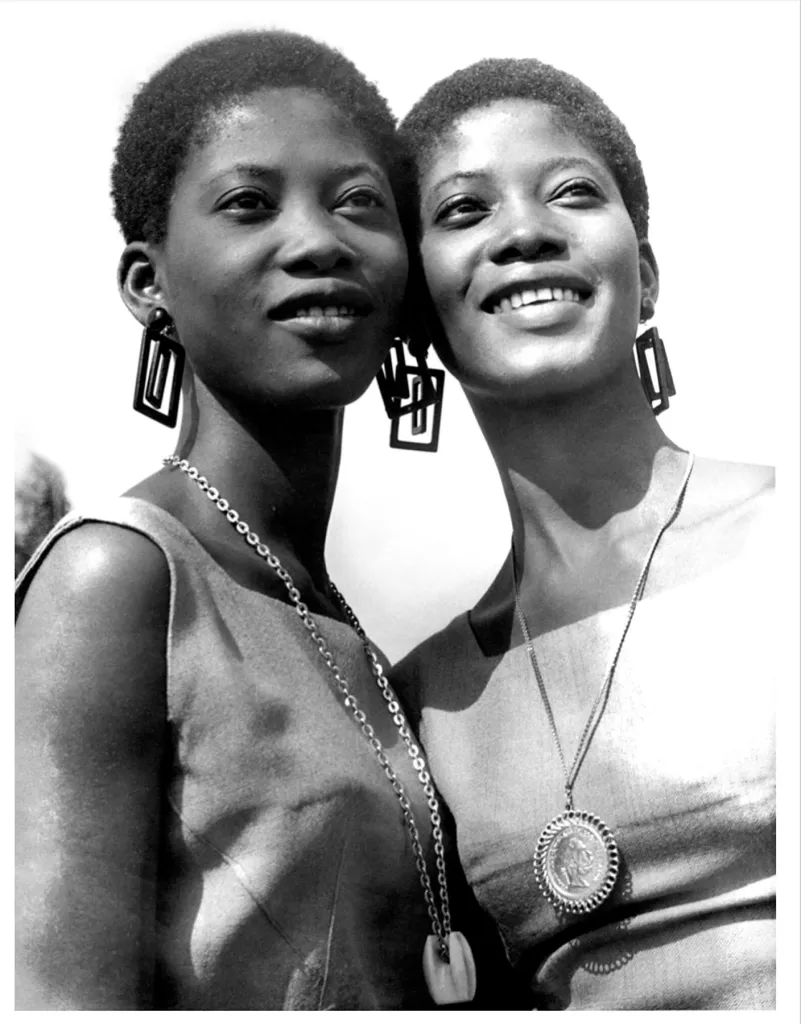
In the golden age of Nigerian pop, when Afrobeat was exploding and disco grooves were taking over dance floors, two identical twin sisters stepped onto the stage and changed everything.**
Taiwo and Kehinde Lijadu—better known as the “Lijadu Sisters“—were more than just performers; they were revolutionaries. Blending psychedelic funk, soul, reggae, and traditional Yoruba sounds, they created a hypnotic style that was as defiant as it was danceable. Decades later, their music continues to echo through modern Afropop, hip-hop, and indie rock.
Roots of the Revolution
Born in 1948 in Jos and raised in Ibadan, the sisters’ journey began early. Inspired by their mother’s record collection—featuring icons like Aretha Franklin and Miriam Makeba—and sharing a bloodline with their second cousin, Fela Kuti, they started singing as children.
By 1969, they signed with Decca’s Afrodisia label. While their debut “Iya Mi Jowo” set the stage, it was their string of 1970s classics—”Danger” (1976), “Mother Africa” (1977), and “Horizon Unlimited” (1979)—that cemented their legacy. Tracks like the socially charged “Orere Elejigbo” mixed tight harmonies with lyrics tackling corruption and women’s rights, proving they weren’t afraid to call out the elite while delivering irresistible grooves.
Bold Voices in a Male-Dominated Scene
What made the Lijadu Sisters truly revolutionary was their presence. In an era where female frontwomen were rare in Nigerian pop, they carved out space as independent voices. They wrote their own material and performed internationally, including a legendary appearance with Ginger Baker’s band at the “1972 Munich Olympics“.
However, success came with hurdles. Like many pioneers, they faced limited royalties and unauthorized reissues, leaving them undercompensated for years. Despite these challenges, their artistic integrity remained unshakable.
The “Alté” Archetype & Modern Samples
Today, a new generation has reclaimed the Lijadu Sisters as the original “Alté girls.” Their influence is visible across the global charts:
Ayra Starr: The Nigerian superstar sampled “Orere Elejigbo” for her 2021 breakout hit “Sare,”introducing the sisters to a global streaming audience.
Amaarae: The Ghanaian-American artist credits the twins’ fearless ethos for shaping her own identity as an African rock star.
Nas: The hip-hop legend reworked “Life’s Gone Down Low” into his own 2006 track, while artists like Conway the Machine and MIKE have also dipped into their catalog for soulful textures.
Hayley Williams (Paramore): Even in the indie-rock world, Williams modeled the bridge of her 2020 single “Dead Horse” after the sisters’ signature layered vocal harmonies.
“They were the first alté girls… their fearless ethos shaped how I approach being an African woman in music.” — Amaarae
The 2024–2025 Renaissance
The revival isn’t just about samples. In 2024, the archival label “Numero Group” launched a massive reissue campaign—the first properly credited editions of the sisters’ discography in decades. Starting with “Horizon Unlimited” and continuing through 2025 with “Danger“, these remasters feature corrected credits and restored fidelity, finally addressing the industry injustices of the past.
A Timeless Legacy

Kehinde Lijadu passed away in 2019, but Taiwo (now known as “Yeye Taiwo“) continues to honor their bond through spiritual work and advocacy. As their records spin on new turntables across the world, it’s clear the Lijadu Sisters are finally getting the recognition they always deserved.
At “Retro Sounds“, we celebrate music that refuses to fade. The Lijadu Sisters’ blend of groove, grit, and grace is the very definition of timeless. Turn up “Come On Home” and hear for yourself—the fire still burns.
Samples
| Contemporary Artist | Song Title | Original Lijadu Influence | Year | Type |
| Ayra Starr | Sare | Orere Elejigbo | 2021 | Sample |
| Nas | Life’s Gone Low | Life’s Gone Down Low (unreleased) | 2006 | Sample/Interpolation |
| Hayley Williams | Dead Horse | Danger (Vocal Style) | 2020 | Stylistic Influence |
| Conway the Machine | Forever Ago | Life’s Gone Down Low (taken down from DSPS) | 2021 | Sample |
| BANTU | Orere Elejigbo | Orere Elejigbo | 2023 | Contemporary Cover |
Citations & Reference links
The Lijadu Sisters: The Nigerian twins who fought the elite with funk – The Guardian
Kehinde Lijadu, 71, Outspoken Nigerian Songwriter, Is Dead – The New York Times
Four years later the “Ayra Starr ” Ep remains a classic
The Lijadu Sisters and the power of copyright-backed reissues – WIPO Magazine
The Lijadu Sisters Announce Reissue Campaign With Numero Group – Pitchfork
Kehinde Lijadu of the Legendary Lijadu Sisters Has Passed Away – OkayAfrica
Nas’s Life’s Gone Low sample of The Lijadu Sisters – WhoSampled
Discover more from Nigerian Sounds
Subscribe to get the latest posts sent to your email.